The Migratory Fiber
Ongoing research, work in progress
2026
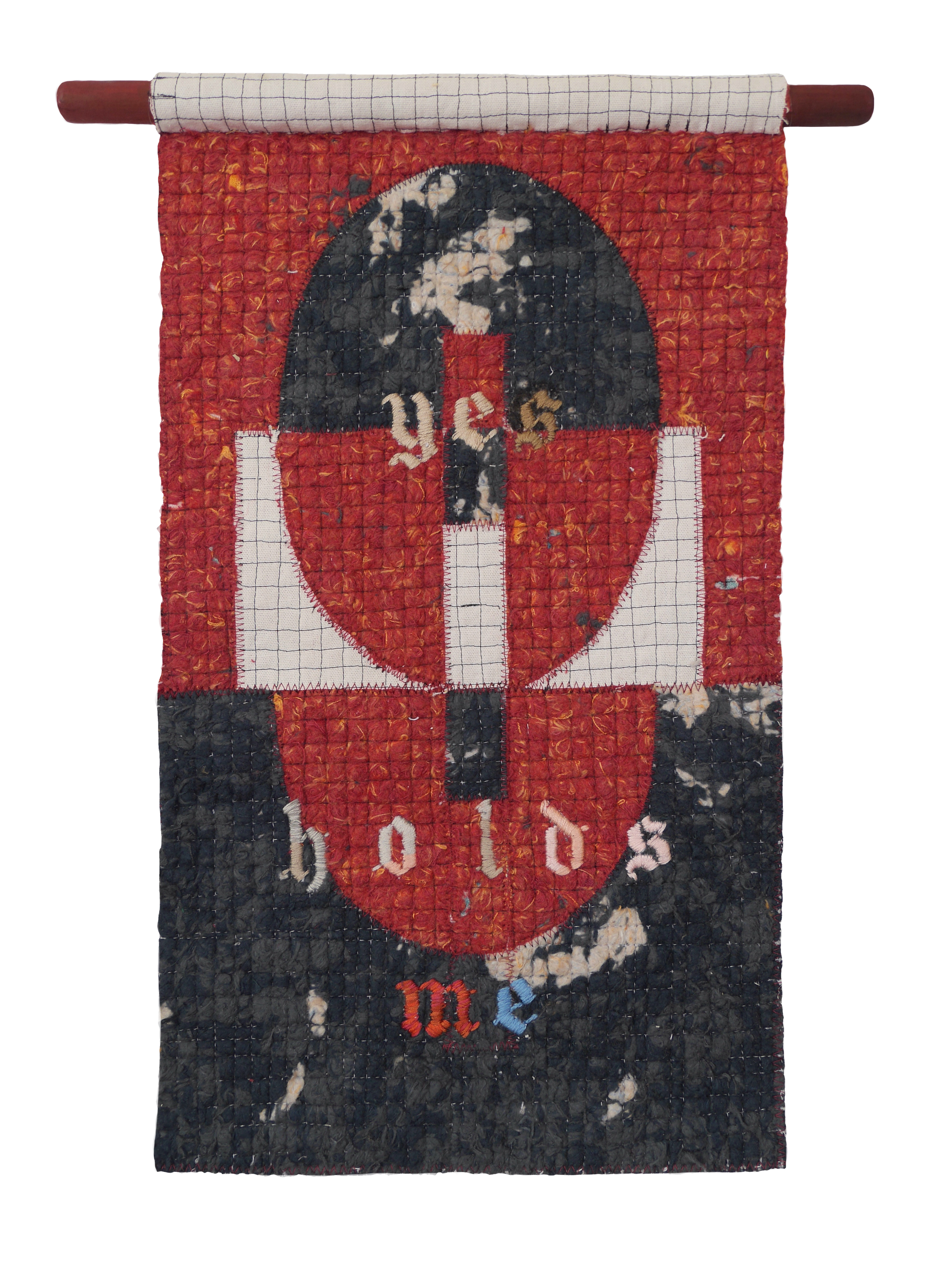
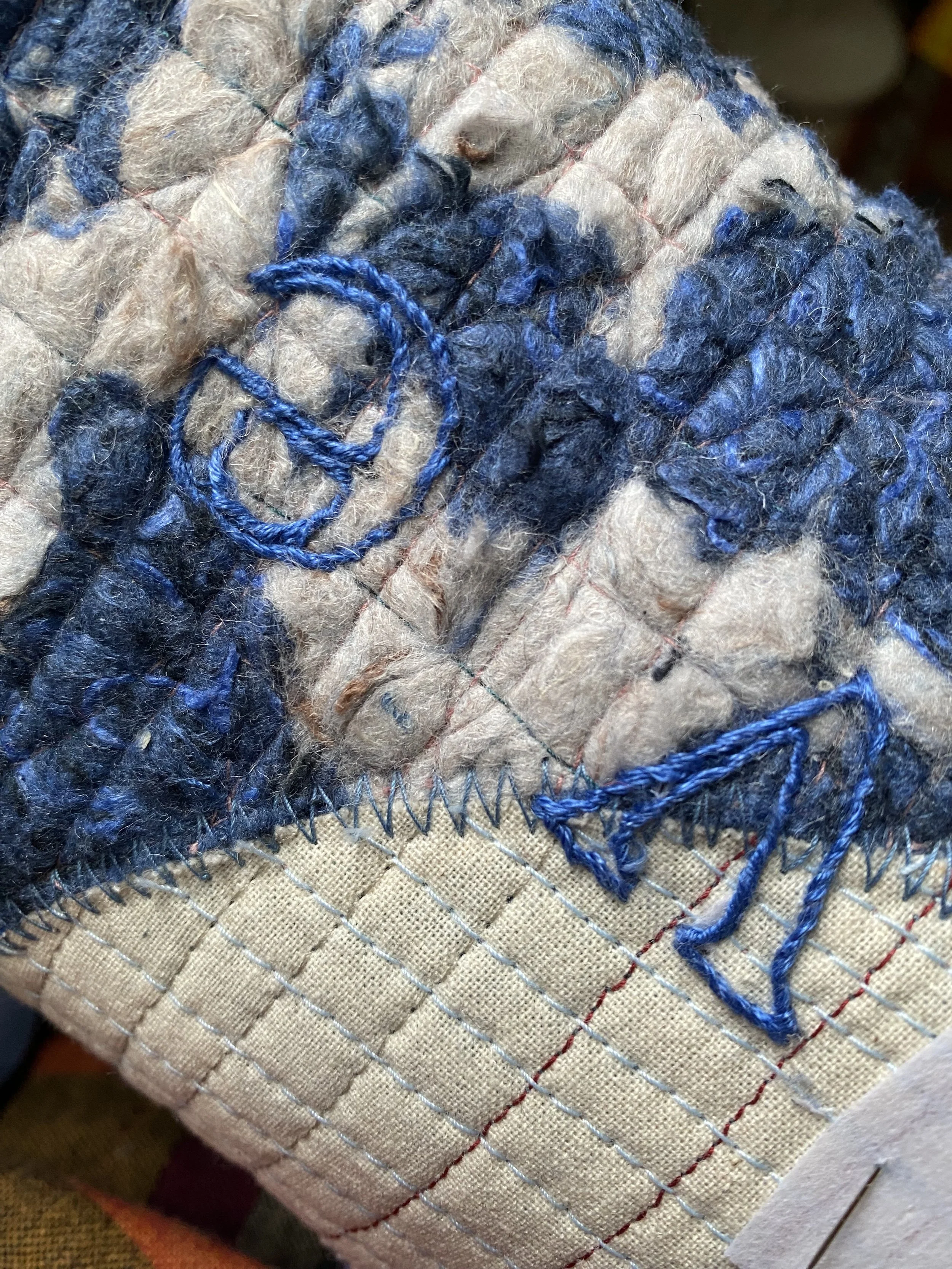
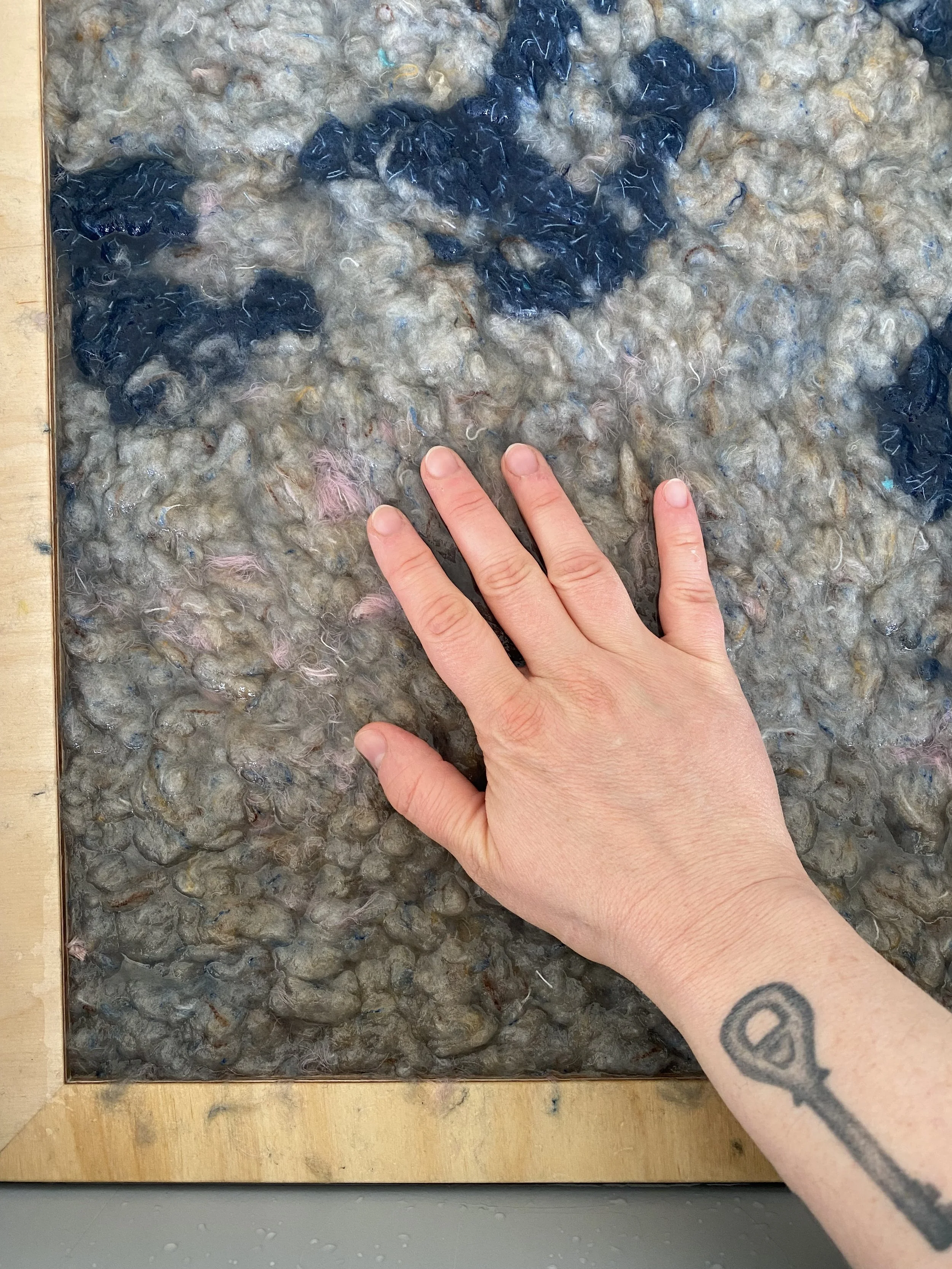
Through a technique similar to traditional papermaking, a textile fleece is produced using exclusively textile waste (predominantly cotton, linen, and wool) and paper scraps.
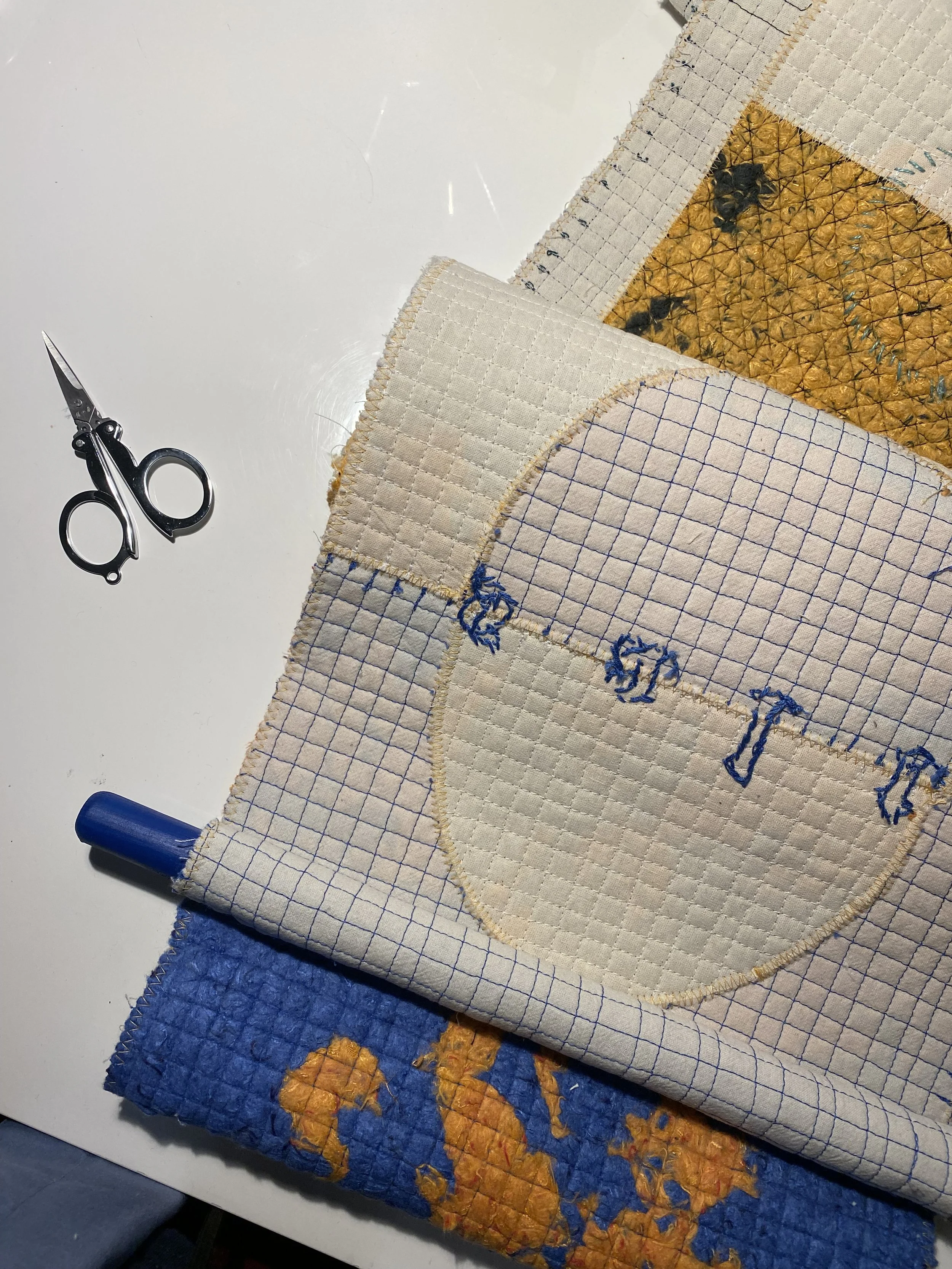
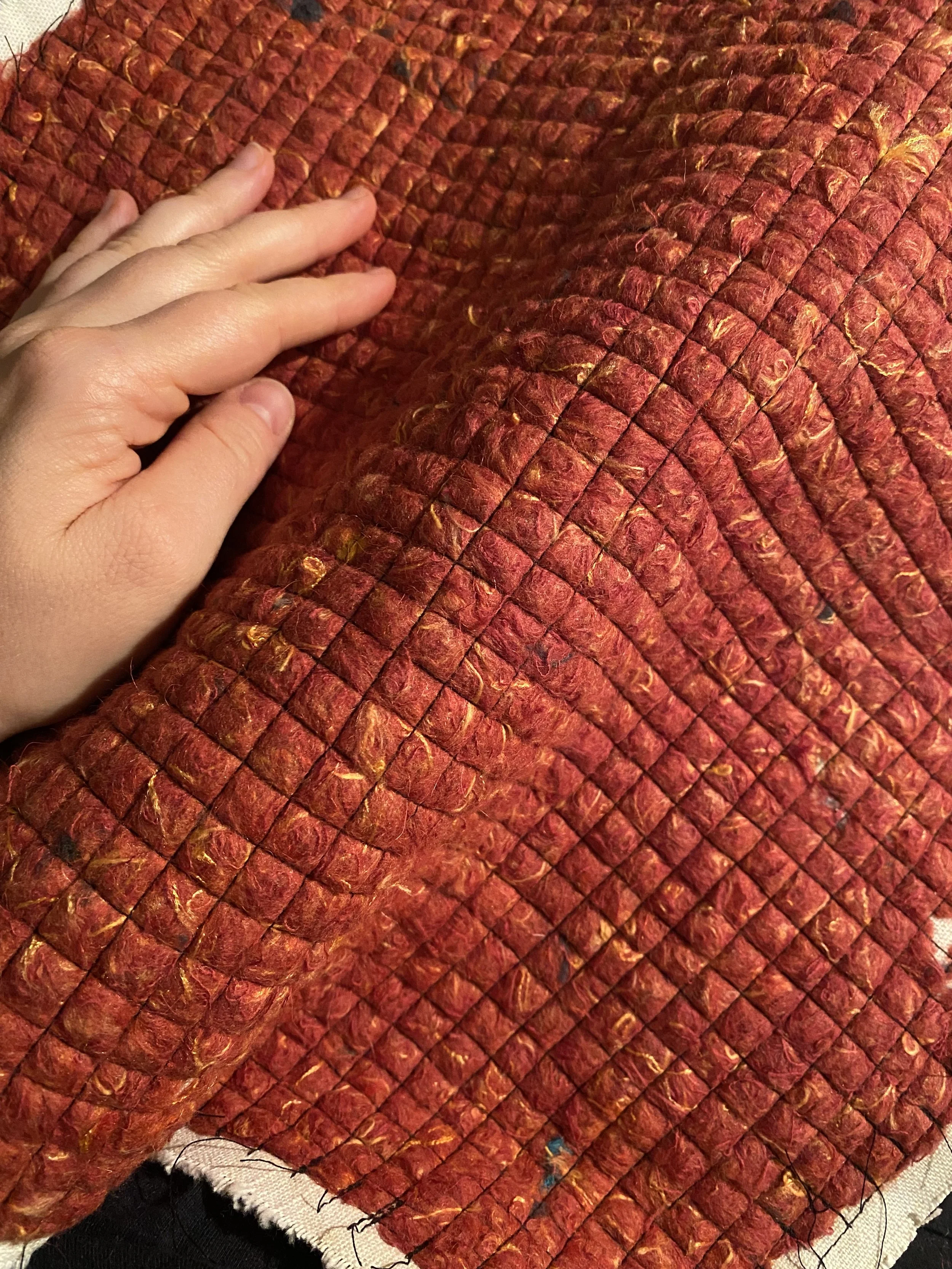
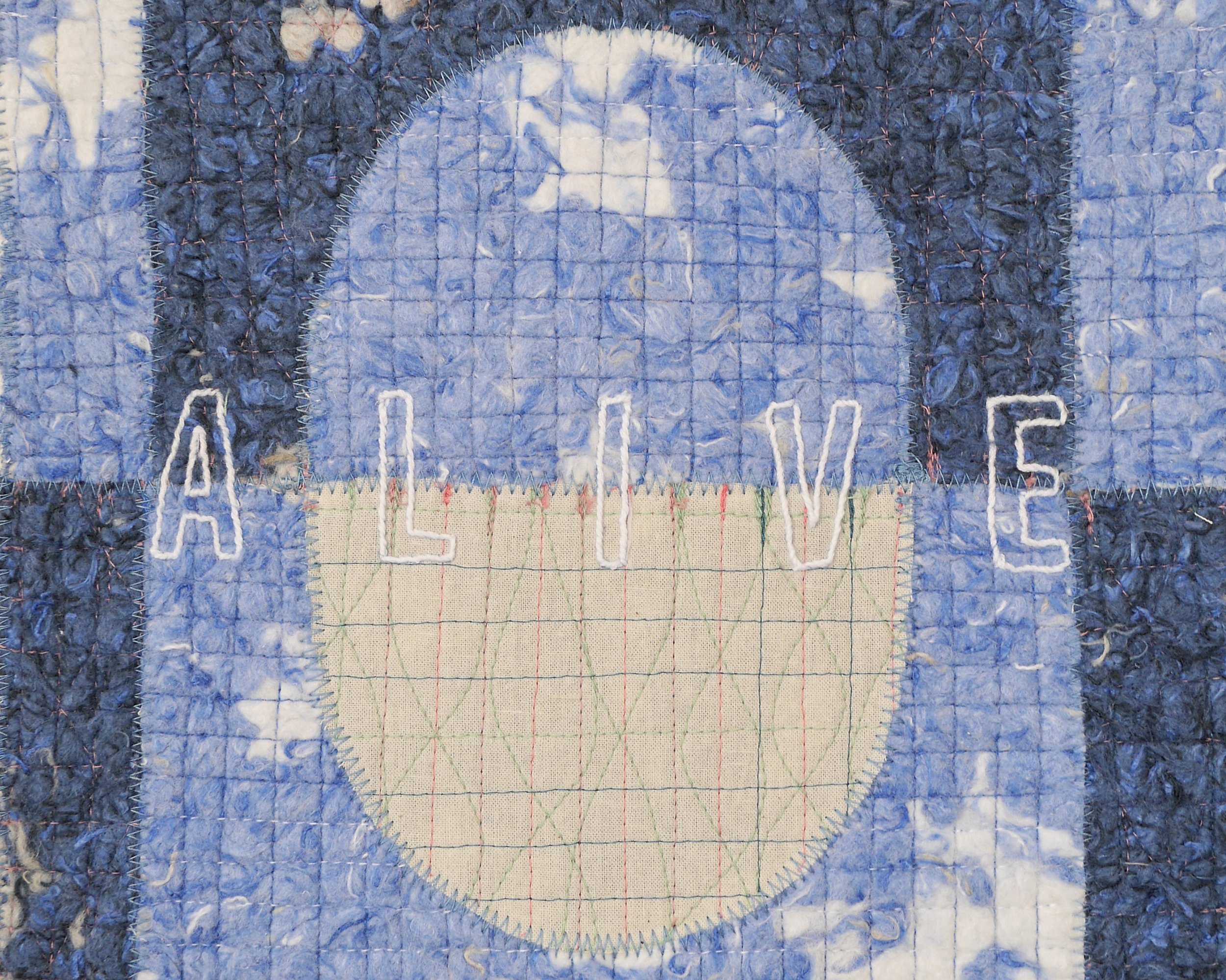
To make it durable, the fleece is sewn onto a backing material in a tight grid and can subsequently be cut, embroidered, and used to create large-scale works that remain soft and flexible, and which can easily be folded, rolled, and manipulated into a variety of shapes.
This ongoing body of work is part of my research into traditional austrian embroidered wall hangings (“Spruchtücher), historic embroidery samplers, textile protest banners, and quilts.
Through my work in textile sculpture using salvaged materials to create three-dimensional figures, ranging from palm-sized to larger than life, I have been thinking intently about our emotional relationship to the tactility of textiles, as well as our use and over-use of fabric and clothing.
Simultaneously, due to my recent work in painting, using paper grocery bags as my canvas, I have been experimenting with the concept of repeatedly folding and unfolding artworks and seeing the traces of this act on the paper as an intrinsic part of their story and appeal.
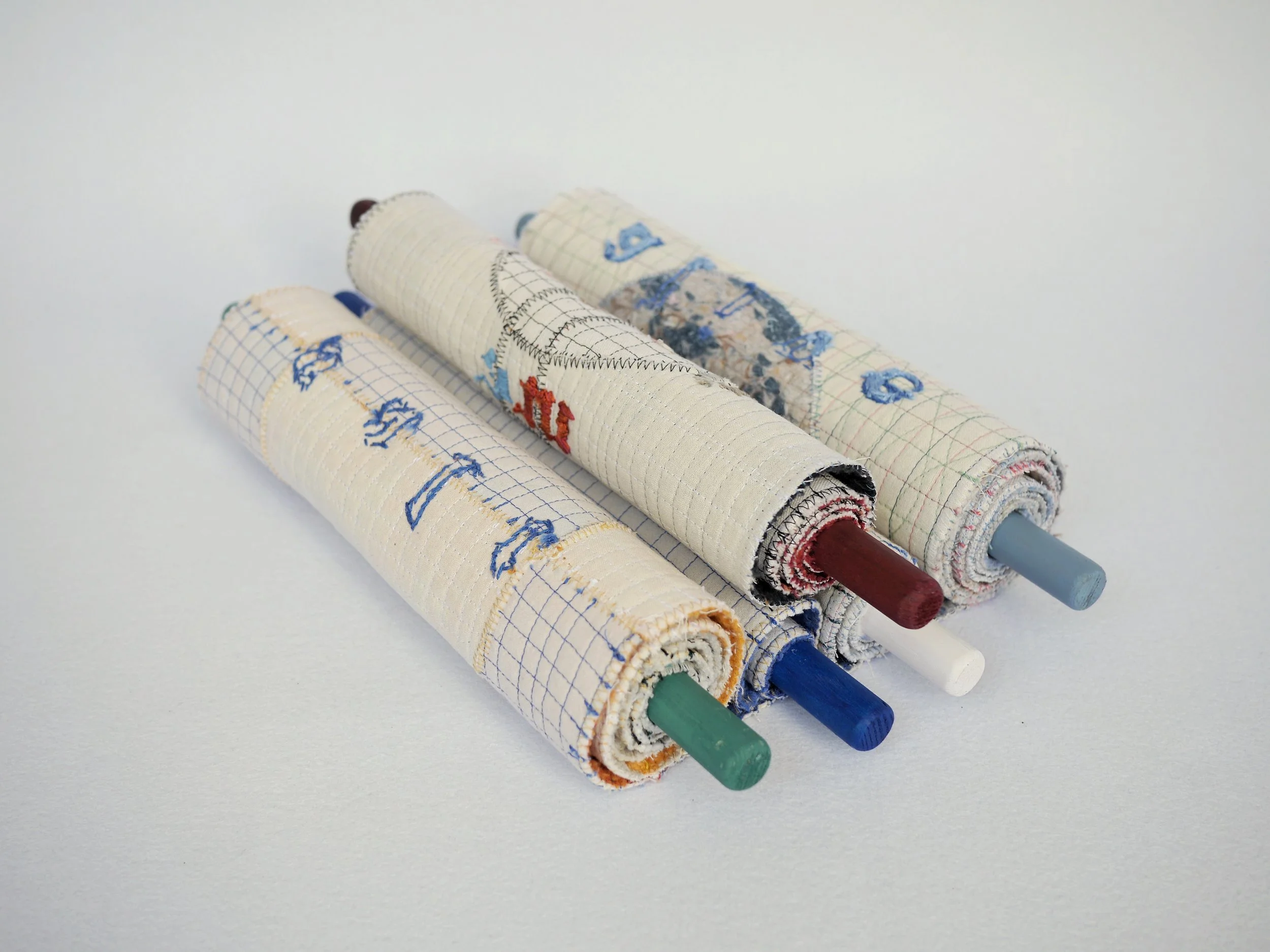
The folding and unfolding, rolling and un-rolling of work is, most of the time, a hidden part of the process of exhibiting and archiving, yet a very normal part of handling textiles that have been passed down generations as heirlooms and functional objects of domestic life. The folding and unfolding of art is also a necessity as artists have to change studios, apartments, and homes due to unmanageable rents, unstable political situations, and the rising threat of losing housing in man-made climate catastrophes.
The banners and scrolls of “The Migratory Fiber” must be rolled and unrolled, and exist as objects of equal beauty whether they are displayed on a wall or rolled up in a box.
I am interested in making work that highlights this process which continuously changes the objects until their eventual disintegration.